
Halloween is the one night a year people go looking for a scare, but unfortunately for the animals that reach our facilities, the scary part is the very reason why they end up in our records.
Stories in which a wild sloth waits on a porch beside a busy street, with as little friendliness as Michael Myers. A small anteater beaten with a stick. A road that cuts a forest in two at high speed. A cage hidden among the trees.
These four stories are real, and every one of them came to our clinic this year. While some may appear hard to read, please stay with each one to the end, because none of them ends where they started.
Rewilding looks like this up close: specialized veterinary care, patience measured in degrees and hours, and a team working toward one goal, sending animals back where they belong, provided they’re able to thrive naturally out there.
Each of these cases were rescued, rehabilitated and rewilded safely with lots of the most scary thing on earth: love.
#1 Someone at the Door
Two-fingered sloth | Choloepus hoffmanni
Case date: Feb 16, 2026
No knock on the door, but shivers were sent down their spines when they saw it.
This two-fingered sloth was sitting on the front porch of a house in La Victoria, a few steps from the street, with dogs that may very well bite him, lurking in the houses around him. He was wide awake and ready to pick up a fight with whoever tried to move him, even our team when they arrived.
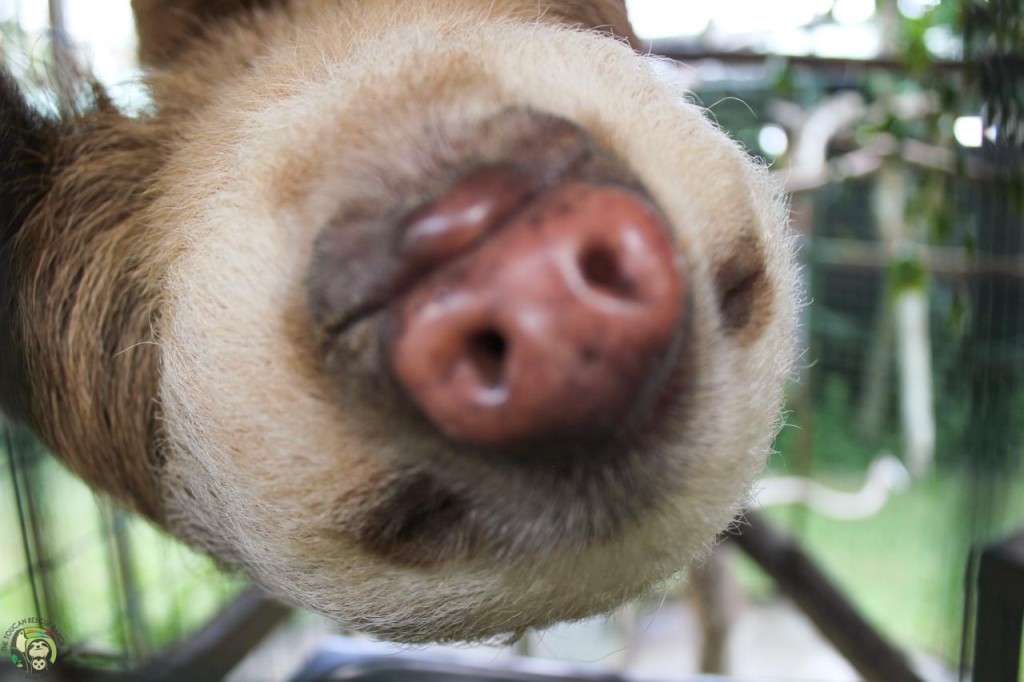
From anyone’s perspective one thing was clear: he really wanted no company whatsoever.
While we’d like to fantasize about how adorable that sloth may have looked, say, possibly rocking on a chair and living the Pura Vida Life, a porch for a sloth is a dangerous place to end up at simply because they are slow and exposed when on the ground, and dog attacks are one of the most common reasons sloths arrive at our clinic.
Urbanization has made it easier for sloths to wind up in neighborhoods, inconveniently crossing power lines and roads. Today we know that no human action has no repercussions on the environment.
This one hadn’t been hurt yet, so our job became keeping it that way despite their scary and sharp fingers.
Our veterinarian sedated him briefly so he could be handled safely, with as little stress as possible for him and no risk for anyone around him. This is exactly the reason why professionals should be the ones handling wildlife or else it can become really violent.
Trick or Treat?
Treat, always treat from TRR!
For this sloth, we got him a full health check. Blood samples went to sloth research that helps us understand the health of wild sloths living alongside people. And he received a non-invasive microchip, a tiny ID that means if he’s ever found again, we’ll know exactly who he is.
As we’ve seen, not every rescue starts with trauma or a bloody scene, some start with a creepy appearance but are solved with an early phone call before a dog, a road or a powerline gets to endanger them for real.
This Halloween, sneak a peek at your porch/patio and if you see a sloth, don’t panic. Don’t touch it or attempt to move it yourself. Keep dogs and children inside, give it space.
They can show up uninvited, but it’s on your actions whether or not they get to leave with a second chance.
Call Toucan Rescue Ranch instead.
#2 The Stick
Northern tamandua | Tamandua mexicana
Case date: Jun 16, 2026
Stories are written in scars as much as in actions.
In fact, scars can tell us way more about where an animal has been than you’d imagine.
Someone picked up a stick, on this occasion.
That is almost all we know. In the center of Río Cuarto, a person came across a northern tamandua, a small anteater that eats ants and termites and wants nothing from people, and beat it.
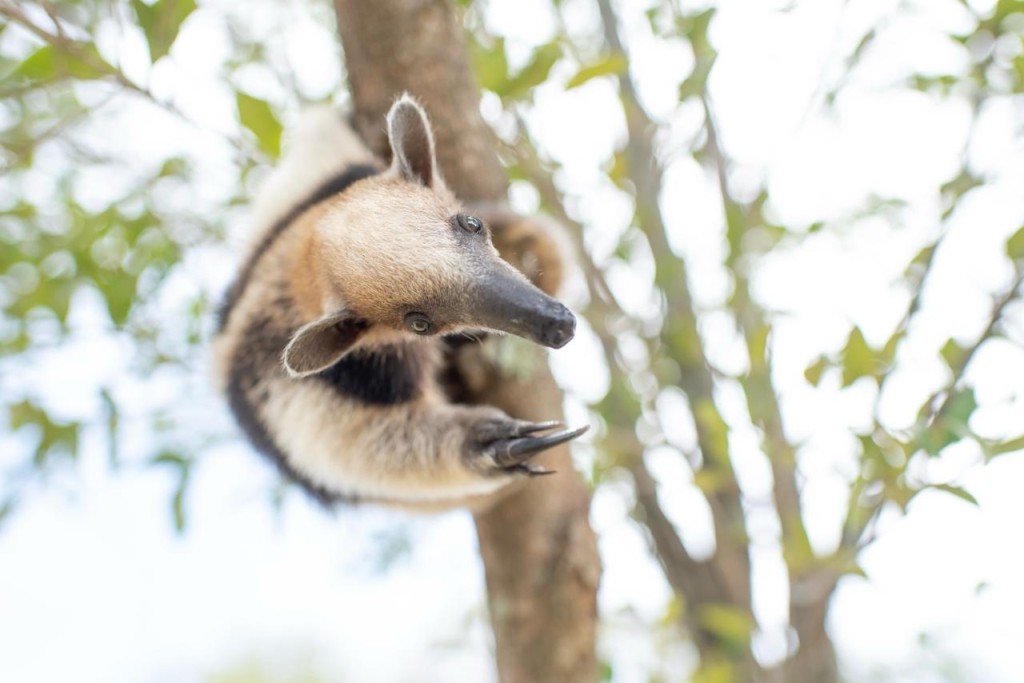
While we’ll never know exactly why (and makes little sense to speculate), the most predictable reason is that they did so out of fear. Tamanduas can look bluntly feisty.
A threatened Tamandua won’t run like a cat or hedgehog; instead, it rises onto its back legs, braces itself on its tail and opens its arms wide, showing long, curved claws. To someone who doesn’t know what they’re looking at, it can look like they’re in for a fight, a straight up menace.
In truth, all they’re facing is a frightened animal asking to be left alone in the only way it knows. Those claws are built for tearing open termite nests, not for chasing people, but ignorance is often met with violence.
Sometimes the most dangerous thing a wild animal can meet is a person who is afraid of it.
This tamandua was brought to us by MINAE. Our team examined it and gave treatment, pain relief, quiet and time to recover. Within a week, it was safely rewilded.
Our goal was to return this quiet worker that can eat thousands of ants and termites in a day, helping keep insect populations in balance in forests, farms and even gardens back to where it belonged. Successfully, within a week, it was safely rewilded.
Our ideal is for this violence against wildlife to end, not for violence to end with wildlife.
The villain of this story is not really a person, but the lack of education and awareness. You can share this story to make sure people understand that a pose from a threatened Tamandua does not mean harm to us, humans.
Let’s make sure nobody else picks up any stick to defend themselves from a threat that’s not even being posed.
#3 Not a Drop of Blood in Three Days
Yellow-throated toucan | Ramphastos ambiguus
Case date: Aug 17, 2026
Not a Drop of Blood
Unfortunately, not a coincidence: a car weighing more than a ton on the one hand; a yellow-throated toucan weighing less than a kilo on the other.
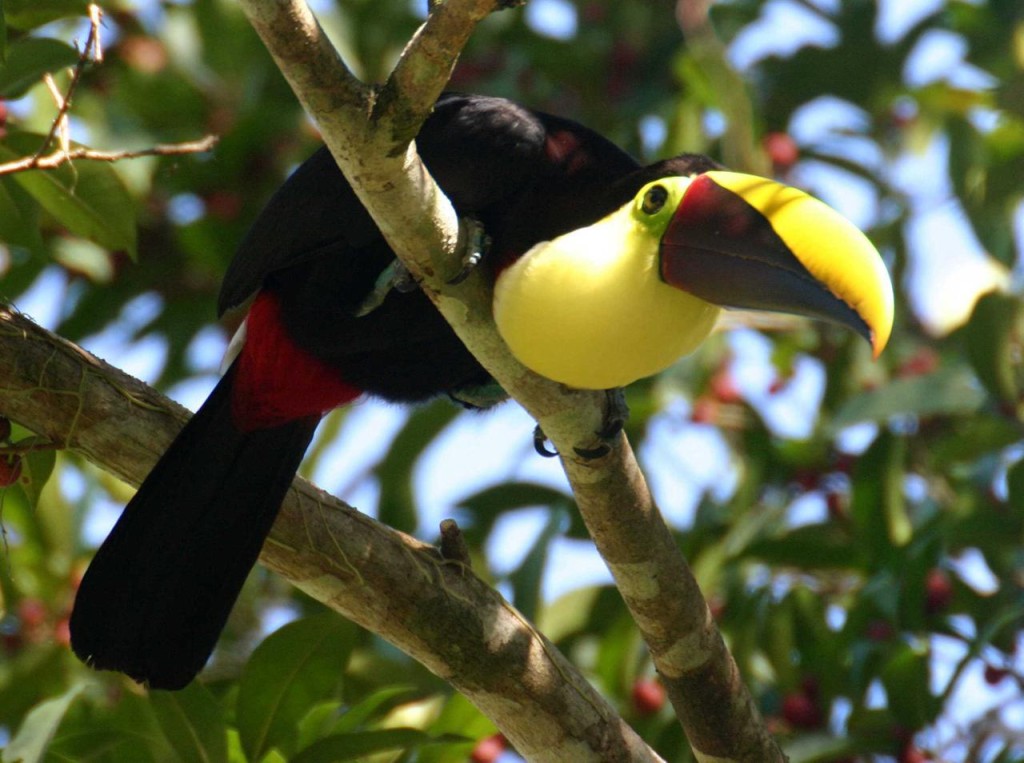
Then, somewhere in La Victoria on August 17th, the two met.
Three days after colliding, this toucan reached our Release Site not being able to stand; in fact, he arrived lying down with his left leg twisted out of place.
Despite such a collision, there was no blood, which might appear at first to be amazing news, right?
Think again! Humans might be able to communicate internal discomfort or that feeling of “something isn’t right,” but animals cannot. For this reason, our team knows that’s the most frightening part: the uncanny bleeding no one sees and the organ failure that prevents us from getting their recovery right on time before it’s too late.
This is why so many of our fundraising campaigns include X-ray and ultrasounds; we need to have no doubt whatsoever that the animal is internally well before rewilding them.
No fractures. No wounds. Wings whole. Beak intact: it turned out everything the car left behind was one bruise.
This story reminds us that the scariest part is how quickly life can change for wildlife when the road crosses the forest.
Once he woke, we moved him to an outdoor enclosure where he climbed onto a perch, held on and began to eat on his own.
Three days later, he flew back to the trees with a tiny, non-invasive microchip so that if he ever needs help again, one quick scan will tell his rescuers his whole story.
#4 111
Birds from the illegal wildlife trade
Case date: January to October 2026
111 =81 at our Release Site & 30 at our Headquarters.
Between January and October 2026, 111 birds came into our care because someone decided that a wild animal belonged to them. If you do the math, that’s more than two birds every week, taken from the forest to be kept as pets or sold.
They came from every corner of the country, and rarely in the ways one might expect. Two orange-chinned parakeets were seized by police aboard a public bus, carried like any other contraband. Nine more were recovered in a single illegal-trade case in La Fortuna. One parrot was simply left at a MINAE office, where it laughed and chattered in a human voice it could only have learned inside someone’s home, far from the calls of its own flock.
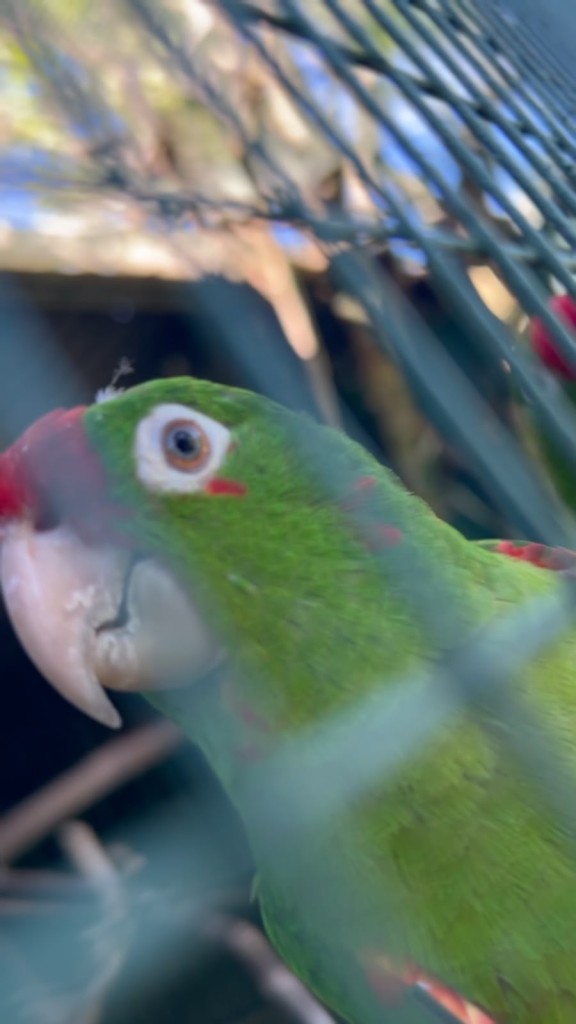
At least 23 had had their wings clipped. While the procedure itself causes no pain (much like cutting hair or trimming a nail), its purpose is cruel in a subtler way; someone is cutting off their wings so that they cannot fly away. They’re handicapping them to have them flutter down to the ground making sure the ceiling becomes their sky. Outwardly, they remain unharmed; in truth, they’ve been put shackles on their freedom.
If there is a monster in this story, it does not live in the forest. It lives in the decision, made by some out of affection and by others for profit, to treat a wild bird as something to own. Keeping wildlife as a pet is illegal in Costa Rica, and every purchase, however compassionate it may seem at the time, finances the next wildlife capture.
Every bird that reaches us is examined, fed and given time to recover. Those whose wings and instincts allow it must still prove themselves in a flight test before returning to the forest. Those that will never fly again live out their lives in a sanctuary, since not everything taken from them can be restored.
If you are ever offered a wild bird, refuse it, even when buying it feels like an act of rescue, and report any sale or caged wild bird to SINAC. 111 birds in ten months is a number we would very much like to see shrink as we move on towards 2027.

