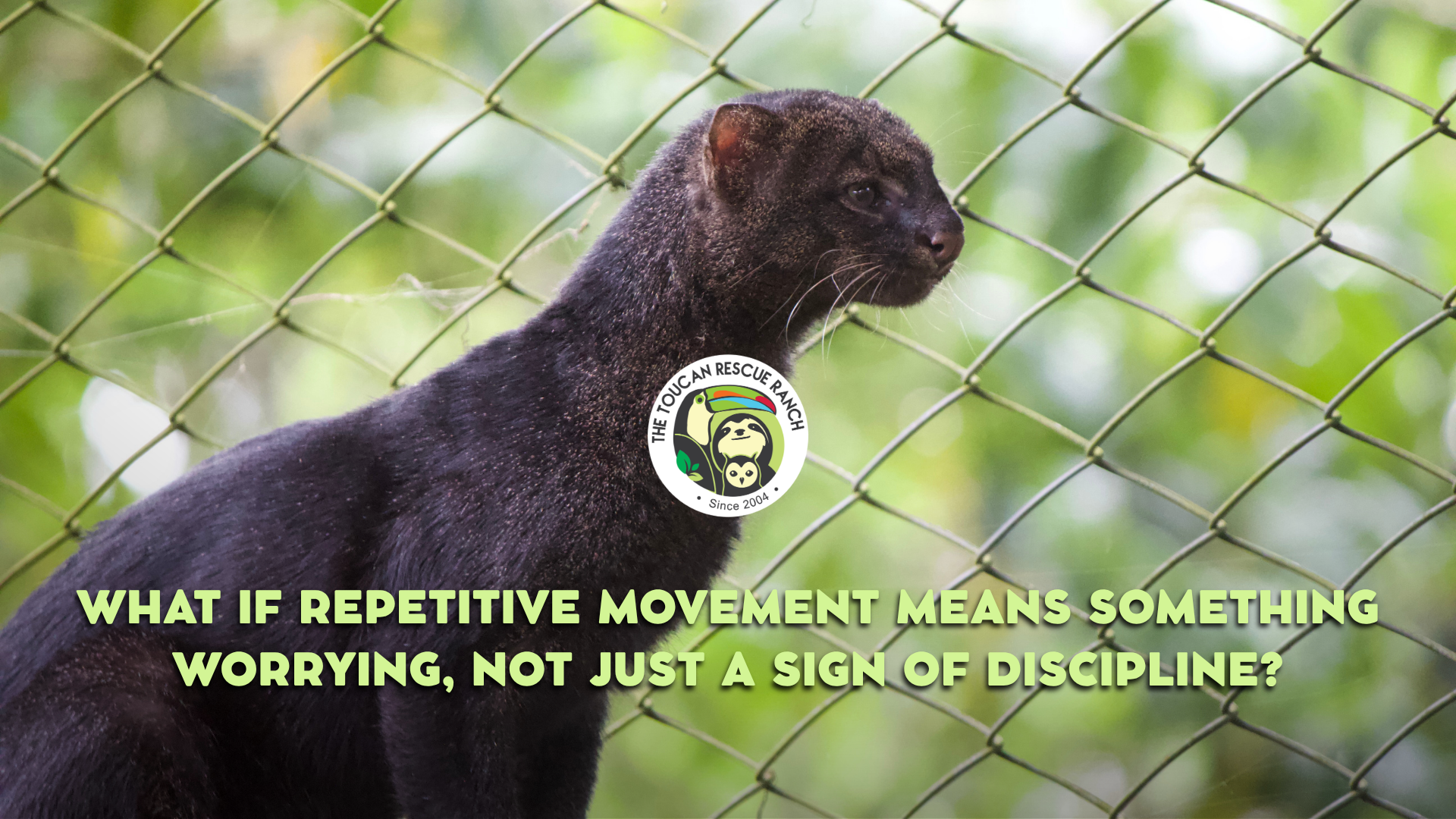
If you’ve ever visited a zoo or wildlife sanctuary and noticed an animal walking back and forth endlessly, methodically, almost like it’s tracing an invisible path, you’ve witnessed something called pacing. While it might look like the animal is either extremely perseverant or simply restless or bored, what’s really happening is a reason to worry.
At Toucan Rescue Ranch, understanding animal behavior is central to everything we do. Hence, the way the animals move, vocalize, eat, and rest tells us a story about how they’re feeling inside: for us, the old saying, “actions speak louder than words” applies here too, so pacing is one of the most important stories we listen to, so let’s briefly uncover two basic things:
What Is Pacing in Wildlife?
Pacing is a type of stereotypic behavior, a repetitive, seemingly purposeless movement that an animal performs over and over again. In wildlife settings, it often looks like an animal walking the same path along a fence line, spinning in circles, swaying from side to side, or repeatedly doing the same route within their enclosure
These behaviors are extremely common in wild animals that have been placed in captivity, particularly when their environment doesn’t match the complexity and richness of their natural habitat. Jaguars, pumas, bears, wolves. For what is worth, no artificial environment that simultaneously can care for the animal and give them that freedom is achievable. It’s one of the inherent issues with enclosure creations.
However, this is exactly why enrichment is so important and why we take care of those enrichment needs.
Why Does Pacing Happen?
For as common as it is spoken of, pacing pacing is not something animals are born doing, but develops over time instead, as a response to stress, frustration, or an inability to perform natural behaviors, much like humans losing hair over stress for example.
In the wild, animals have vast territories to roam, complex social structures to navigate, prey to hunt, and environments that constantly engage their senses and instincts. Understandably then, when those needs go unmet because a space is reduced their stimulation becomes limited, or the social connection too scarce, the struggle to adapt. Instead of simply switching an instinct off, they find an outlet to compensate; i.e. repetitive movement.
Scientists believe stereotypic behaviors like pacing are linked to the same neural pathways involved in frustration and anxiety. We really aren’t that different from them. The behavior may actually provide a small measure of psychological relief (a way to self-soothe), but it’s a sign that something fundamental is definitely missing. If humans get stressed, why won’t animals?
The issue is that once established, stereotypic behaviors are incredibly difficult to reverse. Even if an animal is moved to a much better environment, the behavior can persist for years. This is why early intervention, enrichment, and appropriate enclosure design matter so much; preventing pacing from starting in the first place is far easier than stopping it once it’s become ingrained.
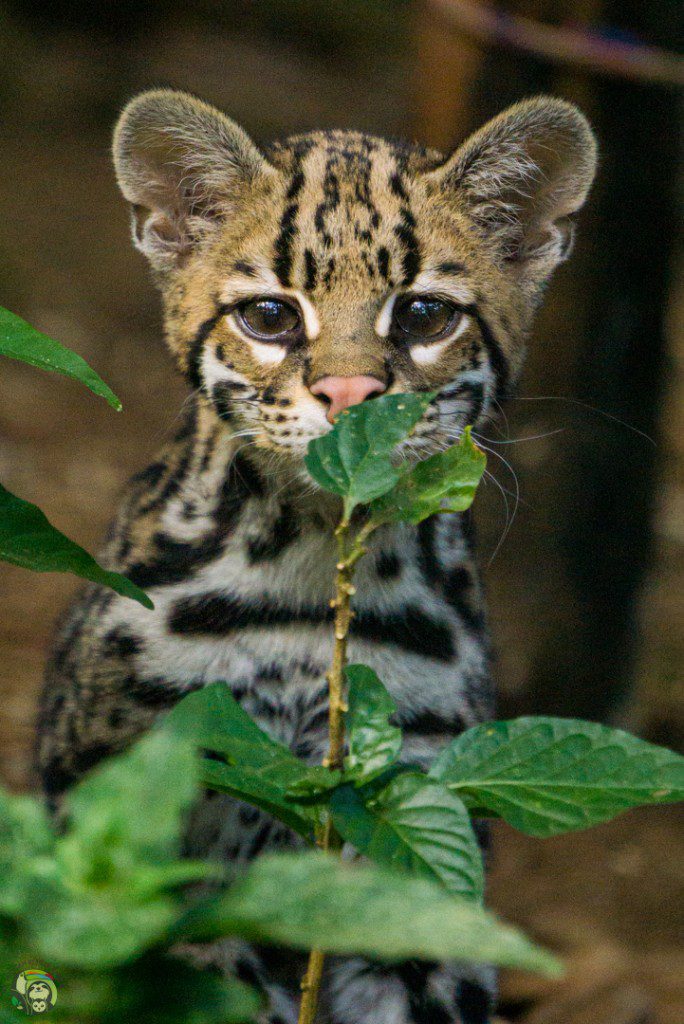
What Pacing Tells Us
When we see an animal pacing repeatedly, it’s telling us several possible things:
Their enclosure may be too small or too bare; wildlife species need space and complexity; branches to climb, water to explore, varied terrain, places to hide, and things to investigate are all essential for mental wellbeing.
Potentially, animals may be experiencing chronic stress, especially if removed from wild adults or kept in isolation.
Thirdly, their natural behavioral needs aren’t being met. A big cat that would naturally spend hours hunting cannot just “turn off” that drive because prey isn’t available. When those instincts have nowhere to go, stereotypic behavior can fill the gap.
The Exception: When Pacing is Healthy
For those of us who care for rescued wildlife, it’s essential to know when pacing is a healthy behavior.
Many animals will pace, pace-walk, or show excited repetitive movement right before feeding time. This is called anticipatory behavior, and it’s seen across a huge range of species, from big cats to raptors to primates. It’s the equivalent of a dog spinning in excited circles when they hear the food bowl.
This type of pacing is brief and tied to a predictable event, as well as accompanied by other clear signs of excitement and positive arousal such as bright eyes, vocalizations, alert posture. It stops once the animal gets their food and returns to normal behavior. It doesn’t repeat throughout the day.
The key difference is context and duration. Feeding-time anticipation is a healthy, goal-directed excitement. Chronic stereotypic pacing, on the other hand, happens throughout the day, persists regardless of what’s happening around the animal, and tends to worsen over time.
How You Help
At Toucan Rescue Ranch, animal’s wellbeing is a priority we ensure by observing and assessing, and then working actively on improving their life conditions. We offer private educational enrichment programs, and we make sure each enclosure provides as-close-as-nature-as-possible everyday to the species under our care.
Appropriate social groupings and attentive caretakers both play a role in keeping our animals mentally healthy and behaviorally sound.
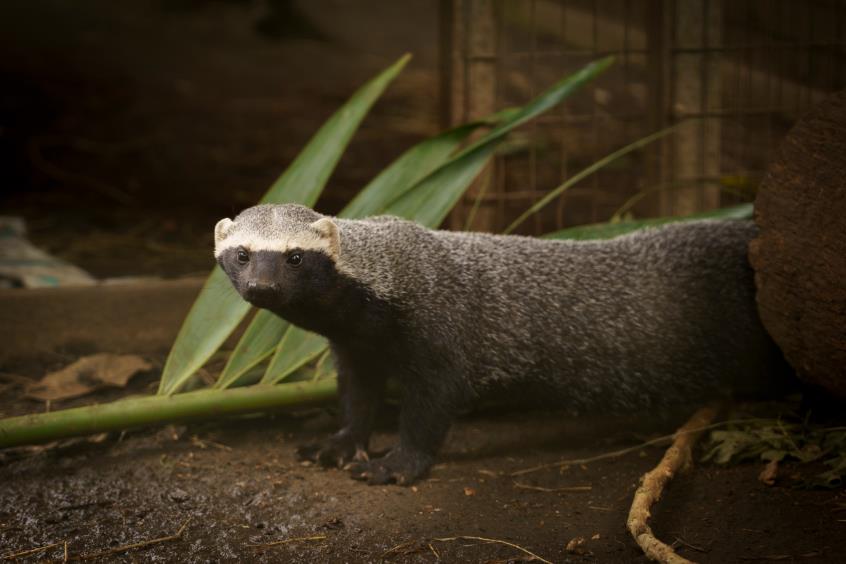
Your support makes that possible when you symbolically adopt a species or offer to volunteer as a business to build enclosures like Moody did this year. It’s because of their help that we have this outstanding Grisson enclosure full of science-backed up enrichment:
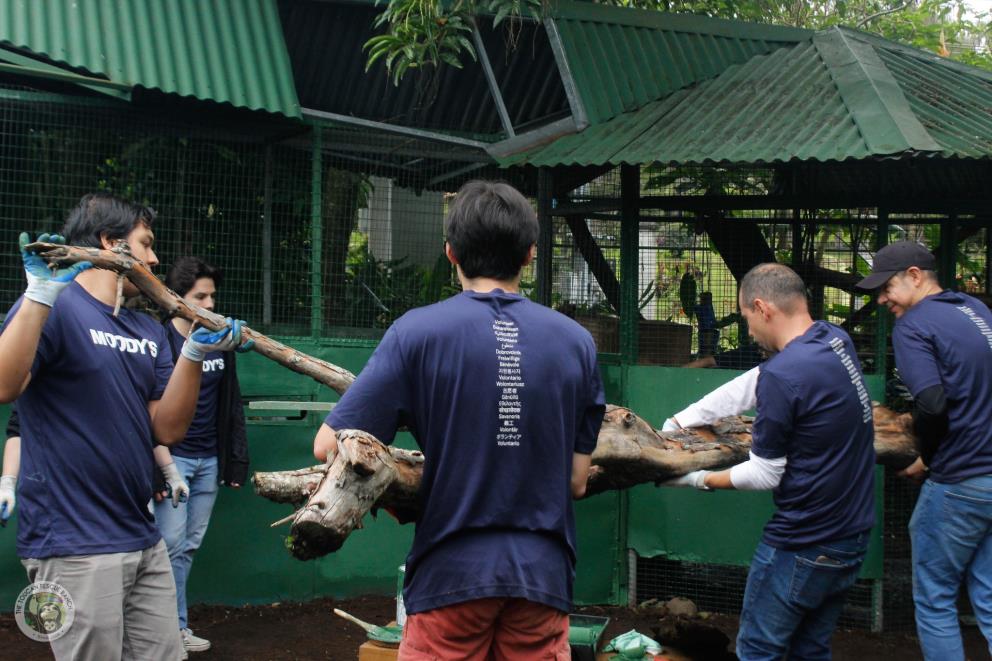
At the end of the day, a rescued animal won’t successfully thrive until both their mind and body are at peace with their new surroundings,
We’re making that be a reality for Grisons and so many other animals under our care.
Thank you for being part of the team that makes that kind of care possible.