Neither withstanding the voltage of a powerline nor remaining unscathed from an 11 meter fall are things a human is equipped to do, then, why should we expect a sloth to survive these?
Falls and electrocutions are among the most brutal traumas anyone can experience, and while you can tell a human what a branch looks like and what an electric cable is, you can’t quite count explaining the difference thereof to a sloth (and expect it to remember it).
The Hard Truth (in numbers)
Electrocutions happen at staggering numbers every day in the wild; one statistic you may want to take home with you is this:
Over 18 animals a day!
In 2024, electricity distribution companies reported 6,703 animals electrocuted on power lines in Costa Rica (MINAE), that’s a little over 18 cases a day in a year’s time.
That same year, our team rescued and cared for 17 electrocuted animals, nearly the equivalent of just one day of these tragedies. Every one of them reached us because someone knew to call. As more people learn the right procedures when seeing a wildlife animal in potential danger and what we do, more animals get a second chance.
However, it’s worth noting that for every animal that reaches us, hundreds more never do.
The most electrocuted victim? Sloths 🙁
In the past two years at Toucan Rescue Ranch we have treated:
- 2025: 28 electrocution intakes, 24 of them sloths (86%)
- 2026 so far: 18 electrocution intakes, 15 of them sloths (83%)
That’s more than 8 in 10.
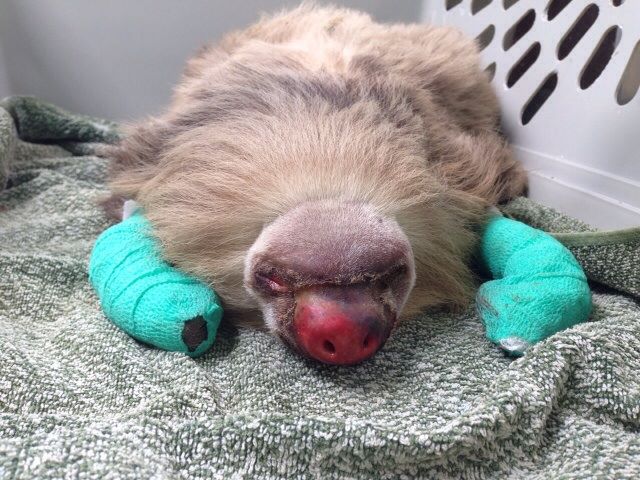
Recovery is not a walk in the park for the heart: this is why we strive constantly to raise funds to care for these cases nearly every week. For example, with the help of donors, we were able to raise $1380 to help cases like Champ, a two-fingered sloth that was found in Guácimo, Limón, by a police officer after being electrocuted.
For Champ, too, what should have been a routine grip on his way through the canopy left his face, one of his eyes and his limbs badly injured. At our clinic at the Release Site, the damage to one of his hands proved too severe to heal, and our team had to amputate it.
Imagine losing your arms, moving painfully and burned all around and not even knowing how that happened in the first place! No one should go through this!
In the world we’re trying to build with your help, all of these numbers decrease.
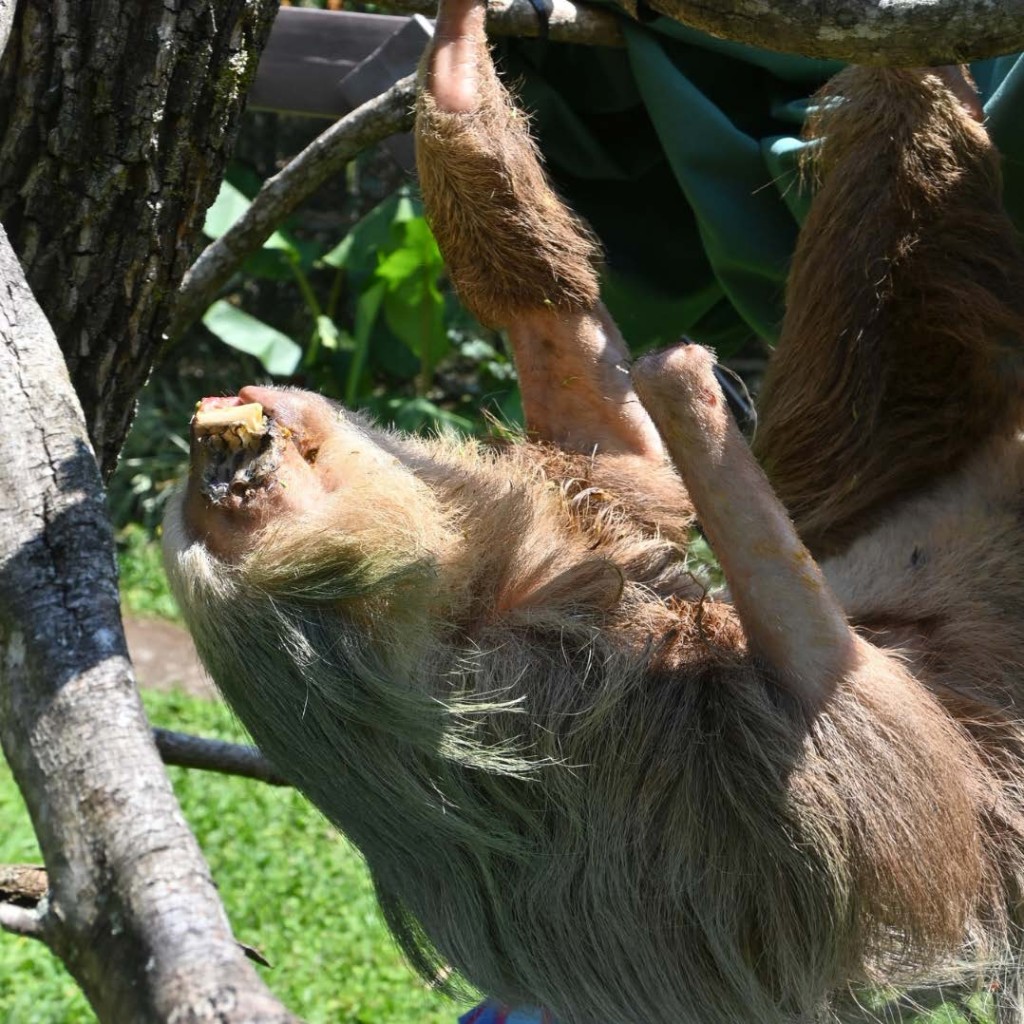
Among our efforts tied to the public and this cause, we have a long standing collaboration with national companies that focuses on creating safer infrastructure that efficiently prevents wildlife crossing, also known as anti-climbing devices. Our facilities are the scaffold for companies to gain live insights into whether or not the solutions they propose work, making it a symbiotic collaboration that decreases those numbers.
How you can help:
Working to avert this crisis takes from reading this article and sharing it with someone who could care, to exercising your voice and demanding training from companies if they require people to handle wildlife.
What else can you do?
- Symbolically adopt an animal to help us fund our efforts for conservation.
- Report injured animals to the respective authorities (MINAE and Rescue Centers like Us)
- Educate those around you with kindness and empathy, either in person or on social media.
- Get involved in as Volunteer or Intern (if you have the chance)
Not everything is bad news though…
While you’re here, let’s celebrate a win. In June 2026, Costa Rica began rolling out a national strategy to prevent wildlife electrocutions, requiring electricity providers to insulate dangerous lines and work alongside rescue centers like ours.
We know the way ahead is still long, but every action you take ensures sloths can safely cross the many canopies of our country.
With your help today, we can make sure every animal that falls from those lines has someone ready to catch it, heal it, and bring it home.
Teaching people to be better wired,
_________________
-Toucan Rescue Ranch Team